
Home › Models › BYD Seal 6 DM-i Touring › Range & Charging
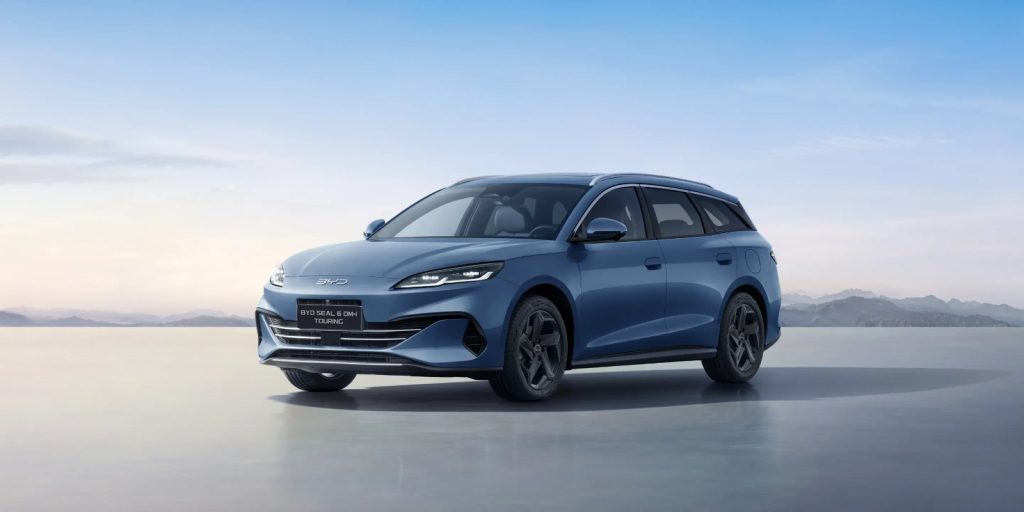
Understanding the BYD Seal 6 DM i TOURING electric range is a critical factor for drivers considering this new plug-in hybrid estate. The vehicle utilises BYD’s advanced Super Hybrid DM-i technology, which seamlessly blends a highly efficient petrol engine with electric power to deliver strong combined ranges and low emissions. This guide explains the available battery options, charging capabilities, and the overall fuel efficiency.
BYD Seal 6 DM i TOURING battery size options
The BYD Seal 6 DM i TOURING battery size varies significantly depending on the trim level chosen. The entry-level Boost trim features a 10.08 kWh Blade LFP battery. This capacity is designed to provide sufficient energy for shorter daily commutes on electric power, while keeping the overall vehicle kerb weight down to 1,710 kg.
Conversely, the higher-specification Comfort trim is equipped with a much larger 19 kWh Blade LFP battery, catering to drivers who require more extensive zero-emission driving capabilities. Both batteries use BYD’s lithium iron phosphate (LFP) chemistry, well-regarded for longevity and thermal stability. The integration of the Blade battery is central to the Super Hybrid DM-i system.
BYD Seal 6 DM i TOURING electric range capabilities
When examining the BYD Seal 6 DM i TOURING electric range, official WLTP figures clearly differentiate the two battery sizes. The 10.08 kWh battery in the Boost trim delivers a WLTP electric range of 31 miles, providing enough zero-emission driving for typical urban trips and local school runs.
Upgrading to the larger 19 kWh battery in the Comfort trim doubles this figure, offering a highly usable WLTP electric range of 62 miles. This makes the Comfort trim suitable for completing most suburban journeys entirely on electric power, drastically reducing reliance on the combustion engine for daily driving tasks.
BYD Seal 6 DM i TOURING fuel economy and combined range
The BYD Seal 6 DM i TOURING fuel economy is achieved through the smart integration of the electric motor and the 72 kW 1.5-litre Xiaoyun petrol engine. These systems work in tandem with a generous 65 L fuel tank. The official WLTP combined range for both the Boost and Comfort trims is highly impressive, capable of reaching up to 839 miles on a full charge and full tank.
In terms of specific fuel efficiency, the Boost trim returns a charge-sustaining combined figure of 58.9 mpg, while the slightly heavier Comfort trim achieves 56.5 mpg. Factoring in electric assistance, the weighted combined fuel consumption for the Boost trim is 108.6 mpg, with CO2 emissions of 60 g/km. The Comfort trim achieves a remarkable weighted combined figure of 166.2 mpg and lower CO2 emissions of just 38 g/km. The vehicle’s aerodynamic drag coefficient of 0.280 also plays a crucial role in maximising overall efficiency.
Charging speeds and connections
Charging times are tailored to the respective battery sizes. The Boost trim with its 10.08 kWh battery is equipped with a 3.3 kW AC on-board charger. A full charge from 15% to 100% on a standard AC connection takes approximately 3 hours. It is important to note that the Boost trim does not support DC rapid charging.
The Comfort trim benefits from a faster 6.6 kW AC on-board charger, which can replenish the larger 19 kWh battery in roughly 2.7 hours. Furthermore, the Comfort trim introduces DC rapid charging capability at speeds up to 26 kW. When using a suitable DC public charger, the battery can be charged from 30% to 80% in just 23 minutes.
Both models include a 3.3 kW Vehicle-to-Load (V2L) function as standard, allowing users to plug in and power domestic appliances directly from the car’s high-voltage battery.
Powertrain performance
The front-wheel-drive powertrain delivers varied performance based on the selected trim. The Boost trim utilises a system power of 135 kW, allowing the estate to reach 62 mph from a standstill in 8.9 seconds. The Comfort trim, weighing 1,805 kg due to its larger battery, provides a higher system power of 156 kW. This power increase reduces the 0-62 mph acceleration time to 8.5 seconds. Both versions share a top speed of 111 mph.
| Specification | Boost Trim | Comfort Trim |
|---|---|---|
| Battery Capacity | 10.08 kWh | 19 kWh |
| WLTP Electric Range | 31 miles | 62 miles |
| Weighted Combined MPG | 108.6 mpg | 166.2 mpg |
| CO2 Emissions | 60 g/km | 38 g/km |
| AC Charging Speed | 3.3 kW | 6.6 kW |
| DC Rapid Charging | Not supported | 26 kW (30-80% in 23 min) |
FAQ
What is the maximum electric range? The maximum official WLTP electric range is 62 miles, available on the Comfort trim equipped with the larger 19 kWh battery. The Boost trim provides up to 31 miles of electric range.
Does the estate support rapid charging? Only the Comfort trim supports DC rapid charging at speeds up to 26 kW, capable of charging the battery from 30% to 80% in 23 minutes.
How big is the fuel tank on the estate? Both versions of the car are fitted with a 65 L fuel tank, contributing heavily to the maximum combined driving range of 839 miles.
Can I power electrical devices from the car? Yes, a 3.3 kW Vehicle-to-Load (V2L) system is standard on both trims, letting you power electrical devices using the main high-voltage battery.
Please confirm current specification, offers and delivery times with your local BYD dealer.